Industry Guides
RFID for Returns: Getting Returned Stock Back on the Floor Faster
Returns tie up inventory that should be selling. Here is how item level RFID gets a returned unit identified, verified, and back into an accurate count in minutes.
Returns were the headline again this summer. At the 20th annual Reverse Logistics Summit in Amsterdam from June 24 to 26, more than 100 retail and logistics executives spent three days on one question: how do you take back a product without losing the margin on it. The scale is what makes it urgent. The National Retail Federation estimates that shoppers returned about 850 billion dollars of merchandise in 2025, roughly 15.8 percent of all sales, and nearly two thirds of retailers say updating their returns process is a near term priority.
Most of that conversation is about shipping, refurbishing, and resale. But there is a quieter problem underneath it that lives in every store: a returned item that does not make it back into an accurate count is inventory you own and cannot sell. RFID is built to close exactly that gap.
Why returns break inventory accuracy
A sale is a clean event. The item leaves, the POS records it, the expected count drops by one. A return is messier. The item comes back to a counter, gets set on a cart, waits to be inspected, and eventually finds its way to a shelf or a rack, sometimes days later and sometimes in the wrong place. During that whole stretch your records and your reality disagree.
The POS can process the refund, but it does not know whether that specific unit went back to the right spot, whether it is sellable, or whether it is even the item that was supposed to come back. So a store ends up with stock that technically exists but is invisible to the system. Online orders get placed against it and cannot be filled, or the item sits in a back room while the floor shows out of stock. Every returned unit that lingers in that limbo is lost selling time.
What RFID adds at the returns counter
The difference is item level identity. Each RFID tag holds a unique identifier, usually an EPC such as an SGTIN defined by the GS1 EPC Tag Data Standard. That is not a category or a style number. It is that exact unit.
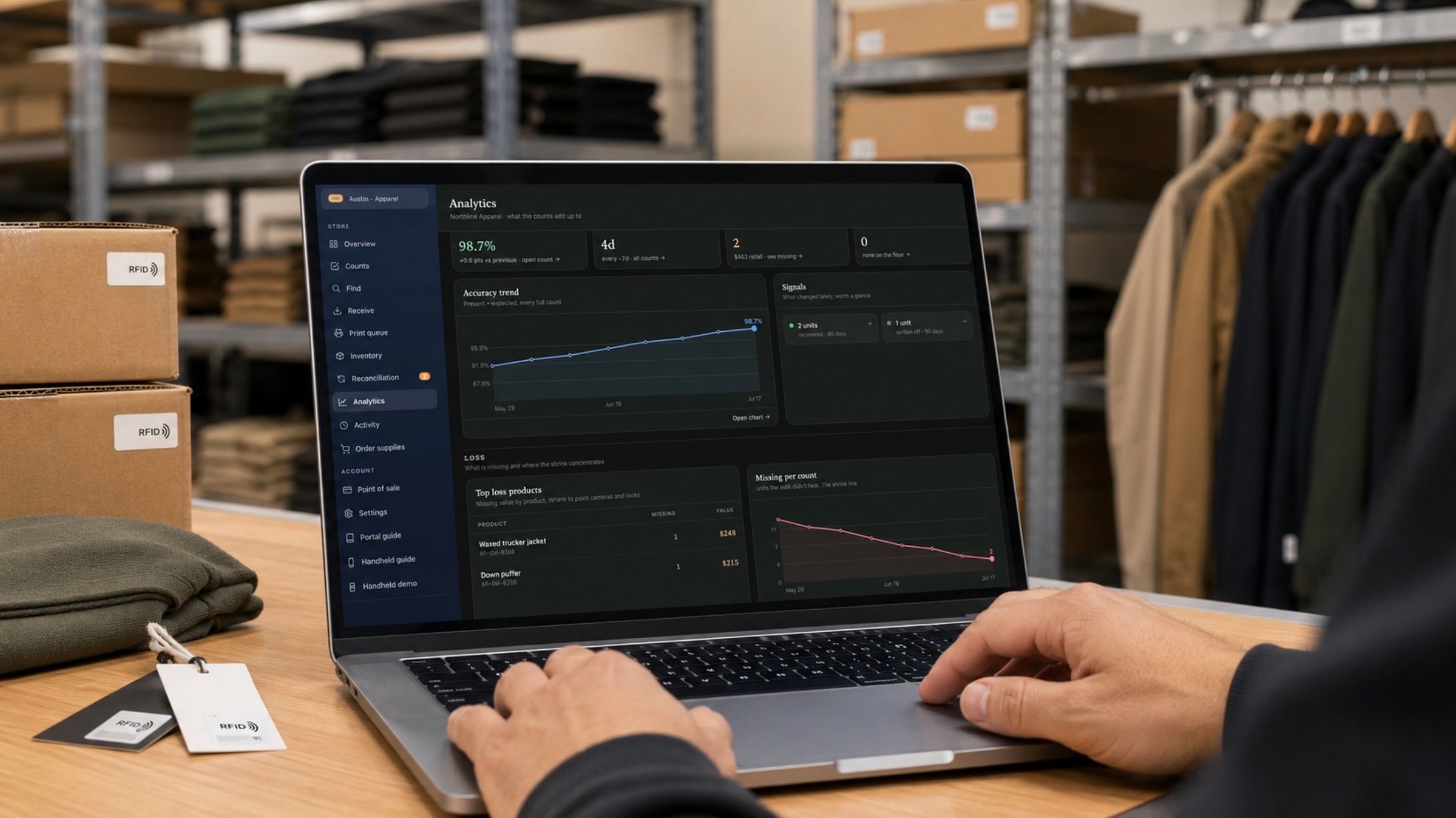
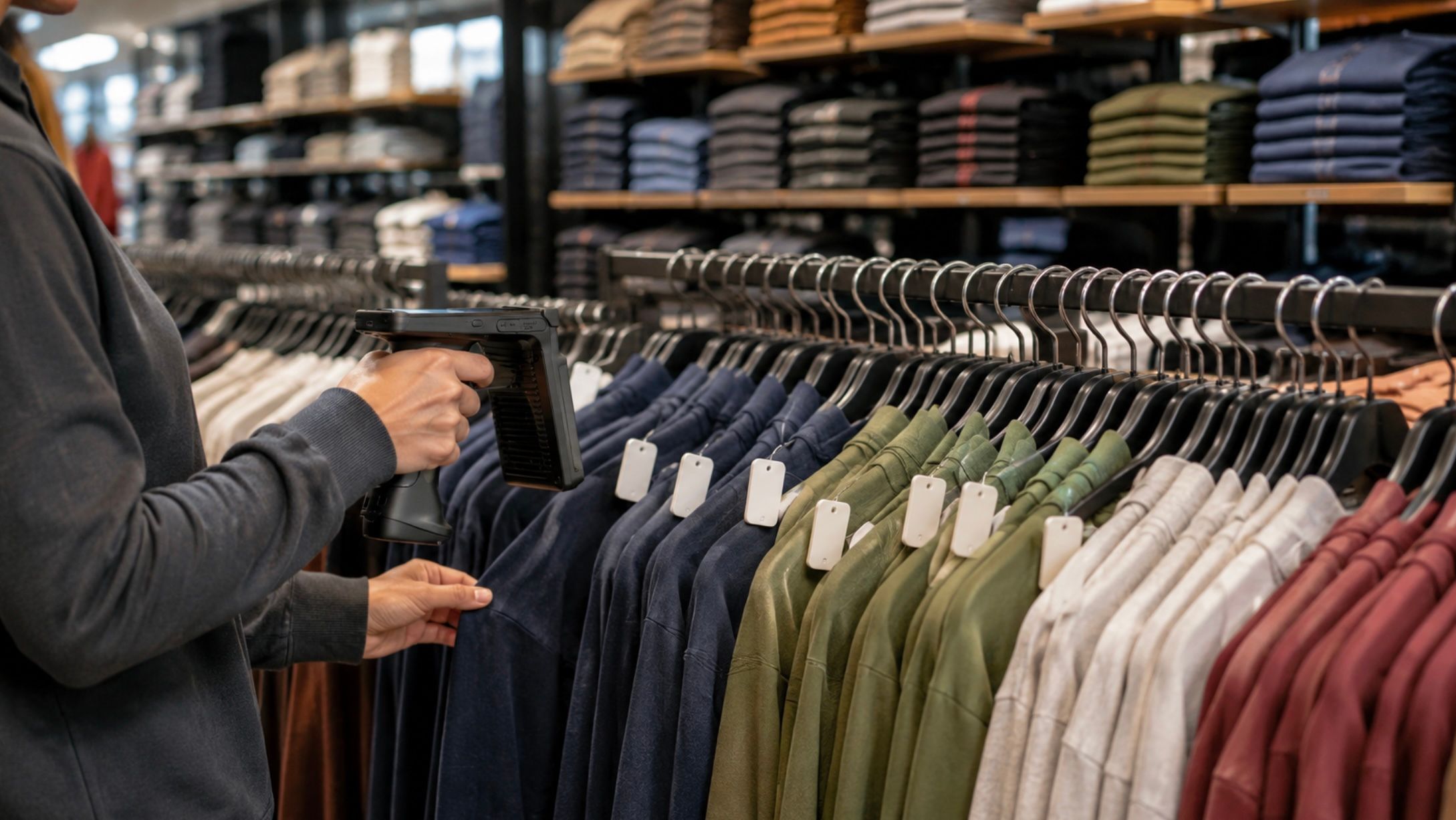
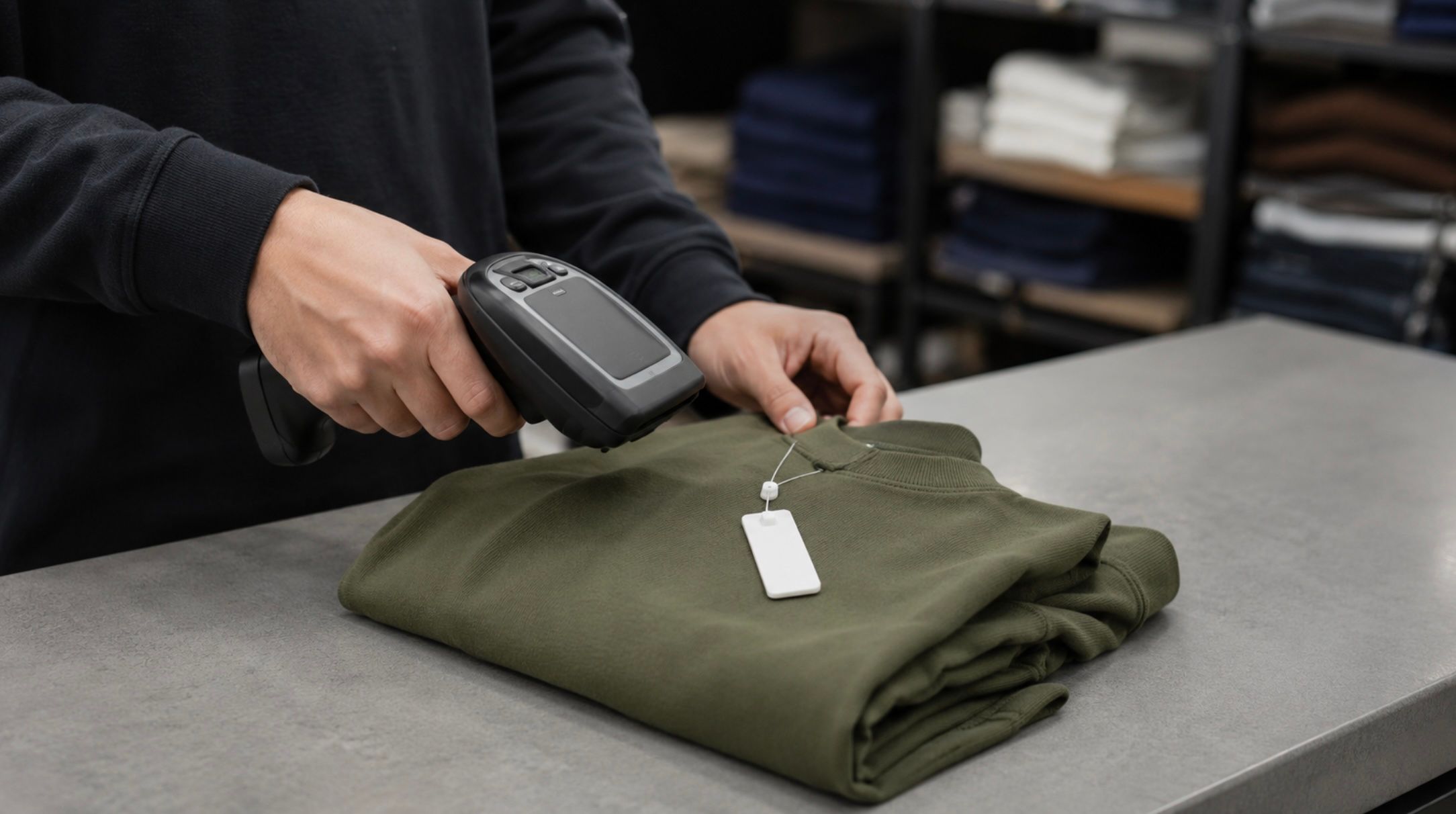
When a tagged item comes back, a staff member reads it with a handheld reader like the C8001. indexRFID, our inventory software, resolves the read to the real product: style, size, color, and where it belongs. In one motion the person at the counter knows precisely what came through the door, without keying in a SKU or squinting at a faded barcode. If the return should include several tagged pieces, the reader captures them together in a single sweep rather than one at a time.
That identity does the quiet work returns depend on. It confirms the item matches what the record expects, it routes the unit to the right location, and it puts that specific piece back into the count as sellable. The POS still owns the refund. RFID owns knowing what physically came back and where it now sits.
Getting the unit back to sellable, fast
The real payoff shows up in the count. Because RFID cycle counts are quick enough to run often, a returned item does not have to wait for an annual inventory to reappear in your numbers. It gets read at intake or on the next floor sweep, and indexRFID folds it back into an accurate, current picture of what you have.
That matters most for omnichannel selling. If your inventory record shows the returned unit is back and available, an online order can be placed against it with confidence, and a ship from store or buy online pick up in store request can actually be fulfilled. The gap between the POS, which knows what you sold, and RFID, which knows what you actually have, is where returns quietly drain margin. Closing it fast is the point.
None of this requires a new checkout system. RFID counting lives in its own software layer and runs alongside Shopify, Square, Lightspeed, or whatever you already use. The count becomes the source of truth, and your existing POS gets corrected to match it.
When the return was never tagged
Not every returned item still has a readable tag, and some categories were never tagged to begin with. This is where producing tags in store helps. The C8005 industrial label printer prints the human readable face and encodes the RFID identifier in the same pass, so a store can retag a returned unit on demand instead of setting it aside.
Match the label to the product. The C8102 hangtag suits clothing, footwear, and soft goods, where it sits away from the garment and reads well. The C8101 adhesive label applies flat to a box or carton for footwear, cosmetics, and other boxed goods. The C8103 jewelry tag loops through small high value pieces. Keep in mind that metal and liquids interfere with UHF radio signals, so for jewelry, cosmetics, or canned goods the label format and placement need to be matched to the material rather than assumed.
Where to start
You do not need to tag your whole store to make returns better. Pick the category that generates the most returns, usually apparel or footwear, and put the returns counter on RFID first. Confirm the workflow, watch how quickly units go from returned to countable, then expand. The hardware is the same for one store or fifty, so the process you prove at one counter is the process you scale.
If you want to see how returns would flow in your store, the RFID starter kit is sized for a single location and includes the reader, the printer, labels, and a year of indexRFID. Or talk to us about the returns bottleneck you are trying to fix. Retail Security Group supplies and supports the line in the U.S., and we have been working inside U.S. retail since 2004.