Industry Guides
RFID for Beauty and Cosmetics Retail: Counting Thousands of SKUs
Beauty stores pack thousands of small, similar products into a tight footprint, which makes counting slow and error prone. Here is how RFID counts a dense cosmetics assortment fast, and how liquids and metal packaging change the way you tag.
Korean beauty is opening physical stores across the United States faster than almost any other retail category right now. When Olive Young opened its first American store in Pasadena this spring, it packed roughly 5,000 SKUs from about 400 brands into a single floor of around 8,600 square feet. It has since added a second Los Angeles location and set a target of five western stores by early 2027, and Sephora will begin curating Korean beauty assortments across hundreds of its own doors this fall. A store that dense raises a hard operating question. How do you keep an accurate count of thousands of small, nearly identical products that sell and replenish fast? For beauty and cosmetics retail, that is the exact problem RFID was built to solve.
Why beauty is hard to count
Beauty is one of the highest SKU count categories in all of retail. A skincare wall alone can carry dozens of brands, each with several product lines, and each line split across shades, sizes, and formulas. Many of those units look nearly the same on the shelf. A serum in a 30 milliliter bottle and the same serum in a 50 milliliter bottle are two different SKUs that a rushed associate can easily miscount.
Now add the way beauty moves. Fast sellers empty a facing in a day, and testers and backstock shuffle constantly. A barcode count in that environment means one scan per unit, line of sight required, on thousands of small items. It is slow, it pulls staff off the floor, and the count drifts almost as fast as you can take it.
The gap between your POS and your shelf
Your point of sale knows what rang up at the register. It does not know what is actually sitting on the shelf right now. The difference between the two comes from misplaced units, receiving errors, and product that was counted wrong the last time anyone tried. Across retail as a whole that gap is large. A landmark study found 65 percent of nearly 370,000 inventory records inaccurate across a single retailer’s stores (DeHoratius and Raman, Management Science, 2008), and the Auburn University RFID Lab puts typical retail inventory accuracy without item level RFID at roughly 65 to 75 percent.
In a beauty store that gap is expensive. Unit values are higher than most soft goods, assortments turn over quickly, and a growing share of demand is online. When the count is wrong, a customer places an order the shelf cannot fill, or a fast mover sits empty because the system still shows stock. RFID does not replace your checkout. It runs alongside Shopify, Square, or whatever you already use, and the count becomes the source of truth you correct your records against.
Liquids and metal are the real engineering problem
Beauty is not just dense, it is physically difficult to tag, and this is where the category needs planning that apparel does not. Passive UHF RFID uses radio energy, and both liquids and metal interfere with that signal. A perfume or toner bottle is mostly liquid. Compacts, lipstick bullets, and many premium cartons use metallic film, foil, or a mirrored panel. Put a standard label flat against any of those surfaces and read range can collapse to almost nothing. This is the same physics that made jewelry the hardest category to bring into RFID, and it has the same fix. Match the label format and its placement to the material.
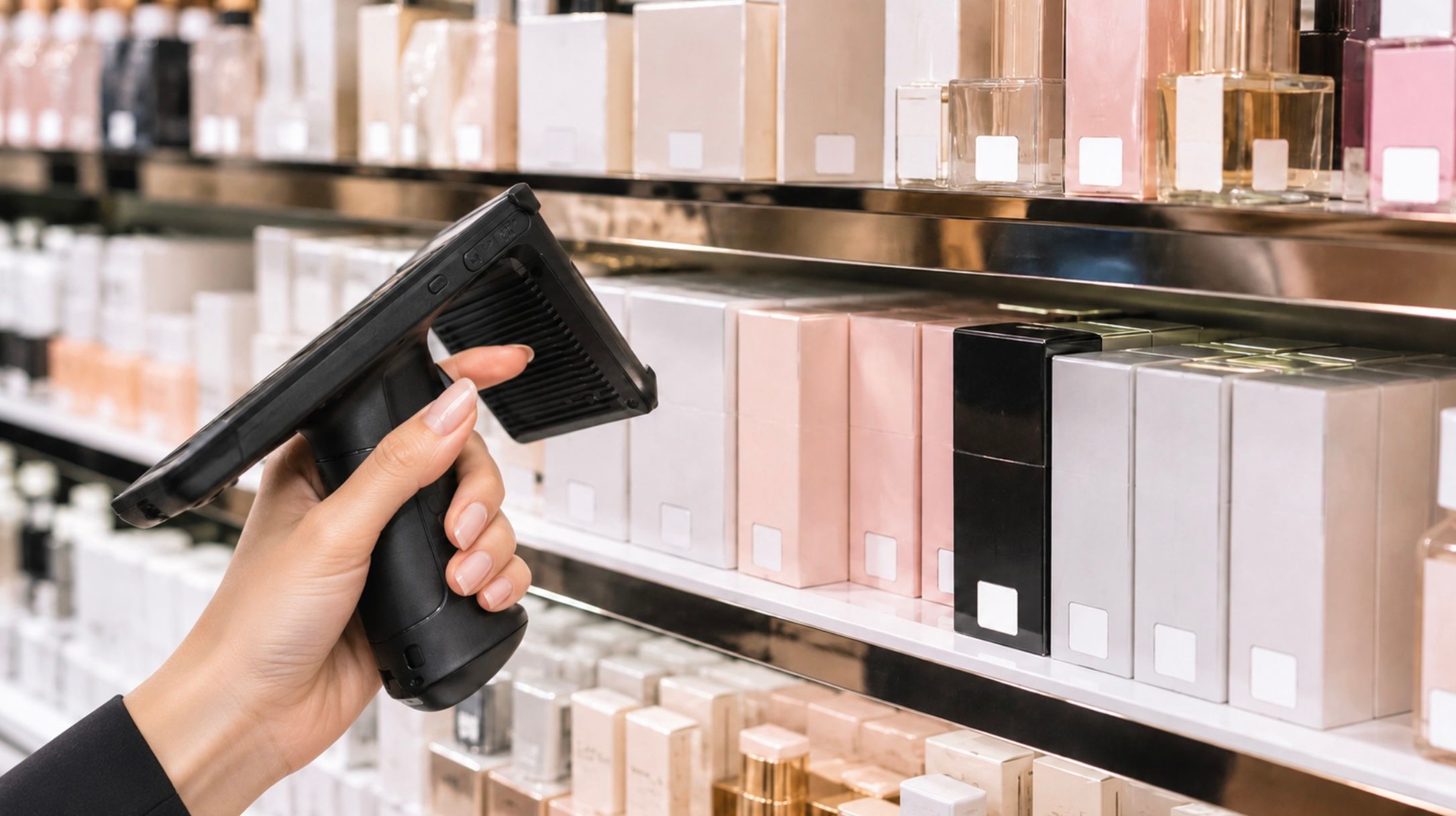
For most beauty, the practical answer is the C8101 adhesive label applied to the outer carton rather than the wet or metallic primary package. Boxed skincare, fragrance in a carton, and blister packed accessories all tag cleanly this way, because the paperboard gives the inlay a little distance from the liquid or foil inside. Where a product ships without a box, placement moves to the least conductive face, away from any metal panel. Beauty tagging is a placement decision, and getting it right in the first pilot is what makes every later count reliable. Our guide to choosing the right RFID label walks through the three formats and where each one fits.
Why the count pays off in beauty
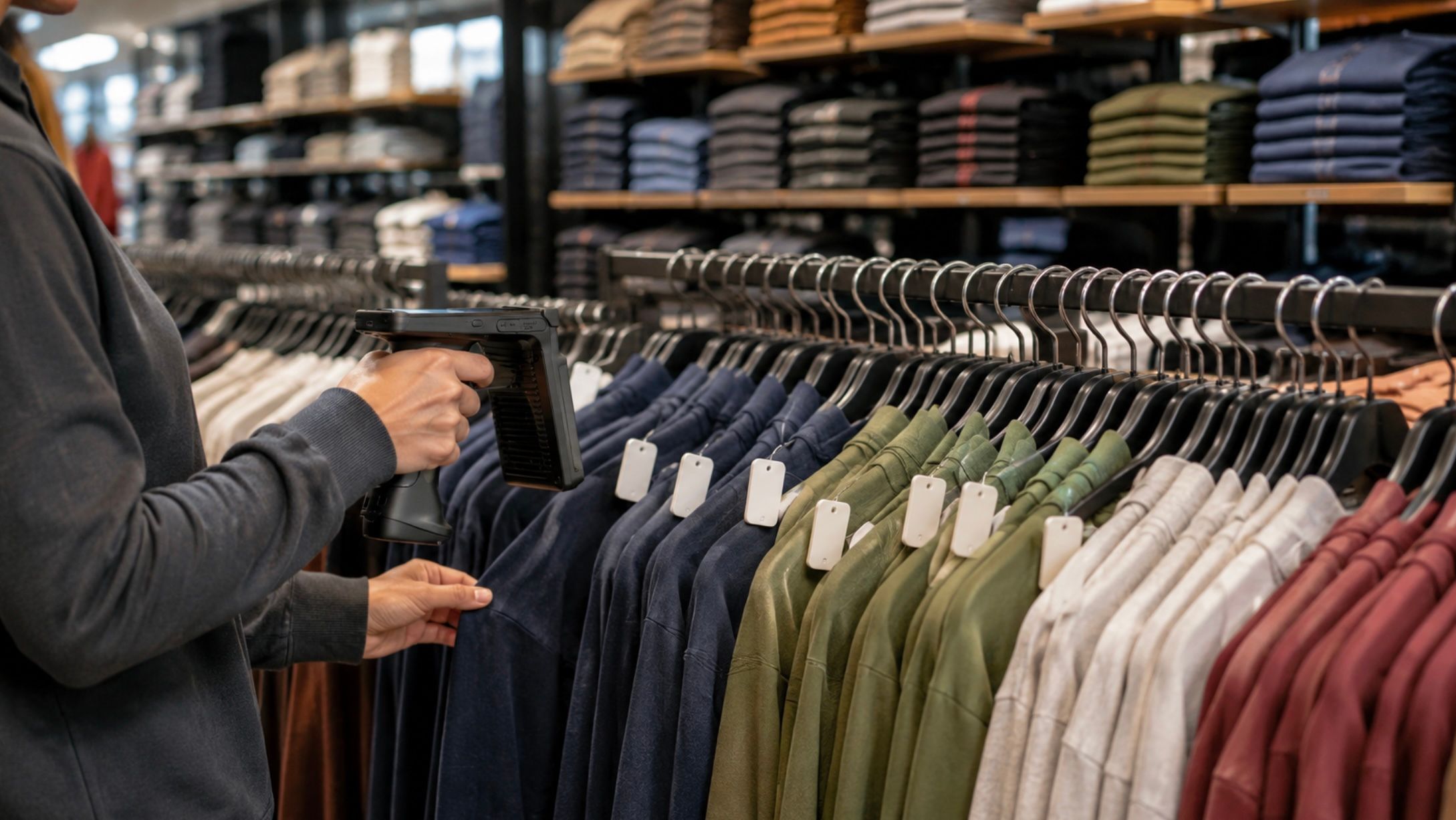
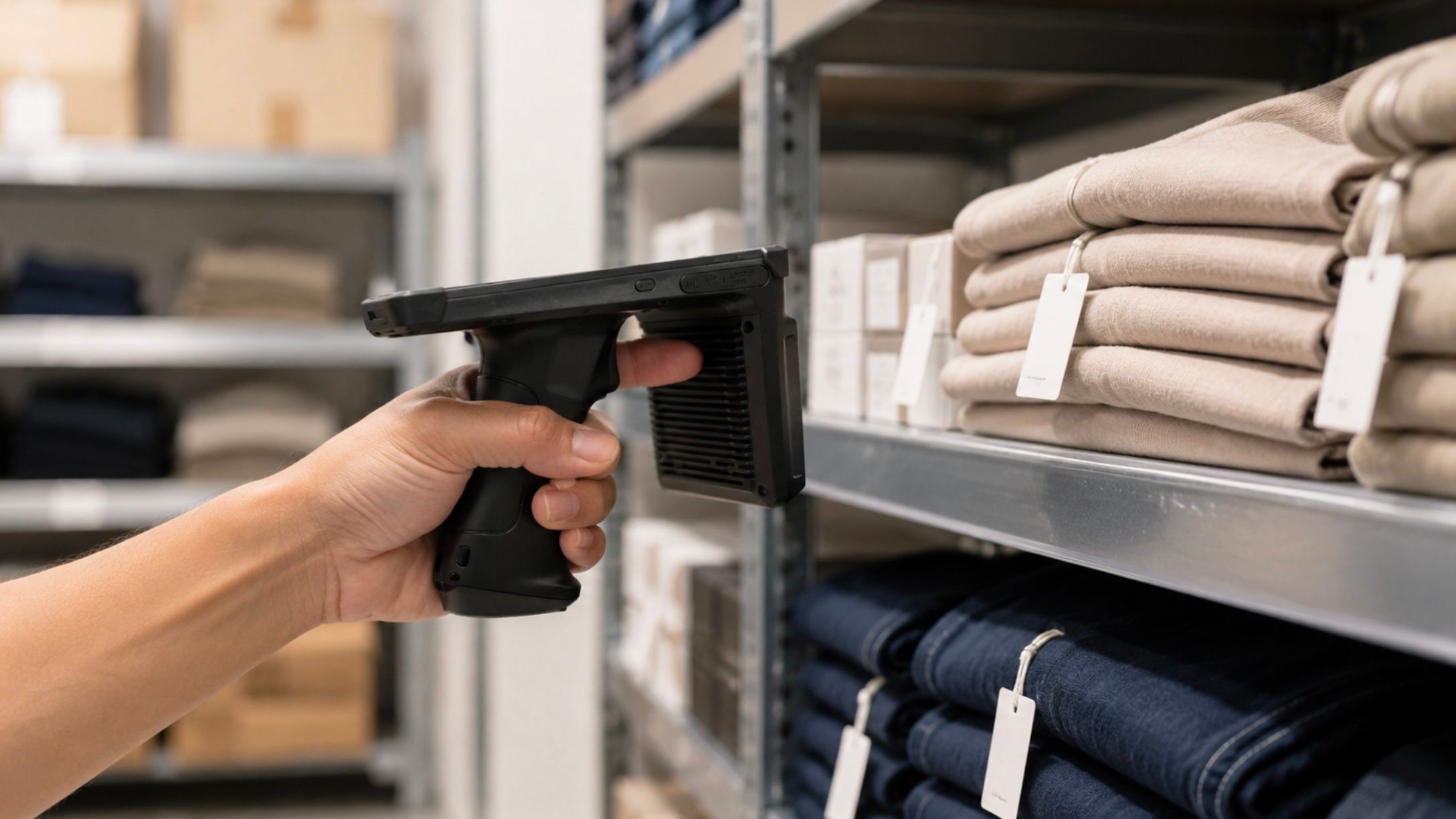
Once the tagging is right, the speed follows from physics. A C8001 handheld reader energizes every tag in range at once and reads them in bulk, no line of sight and no one at a time scanning. A wall of a few hundred SKUs that took an hour by barcode becomes a sweep measured in minutes. The mechanics are the same for every category and are walked through in how RFID inventory counting works.
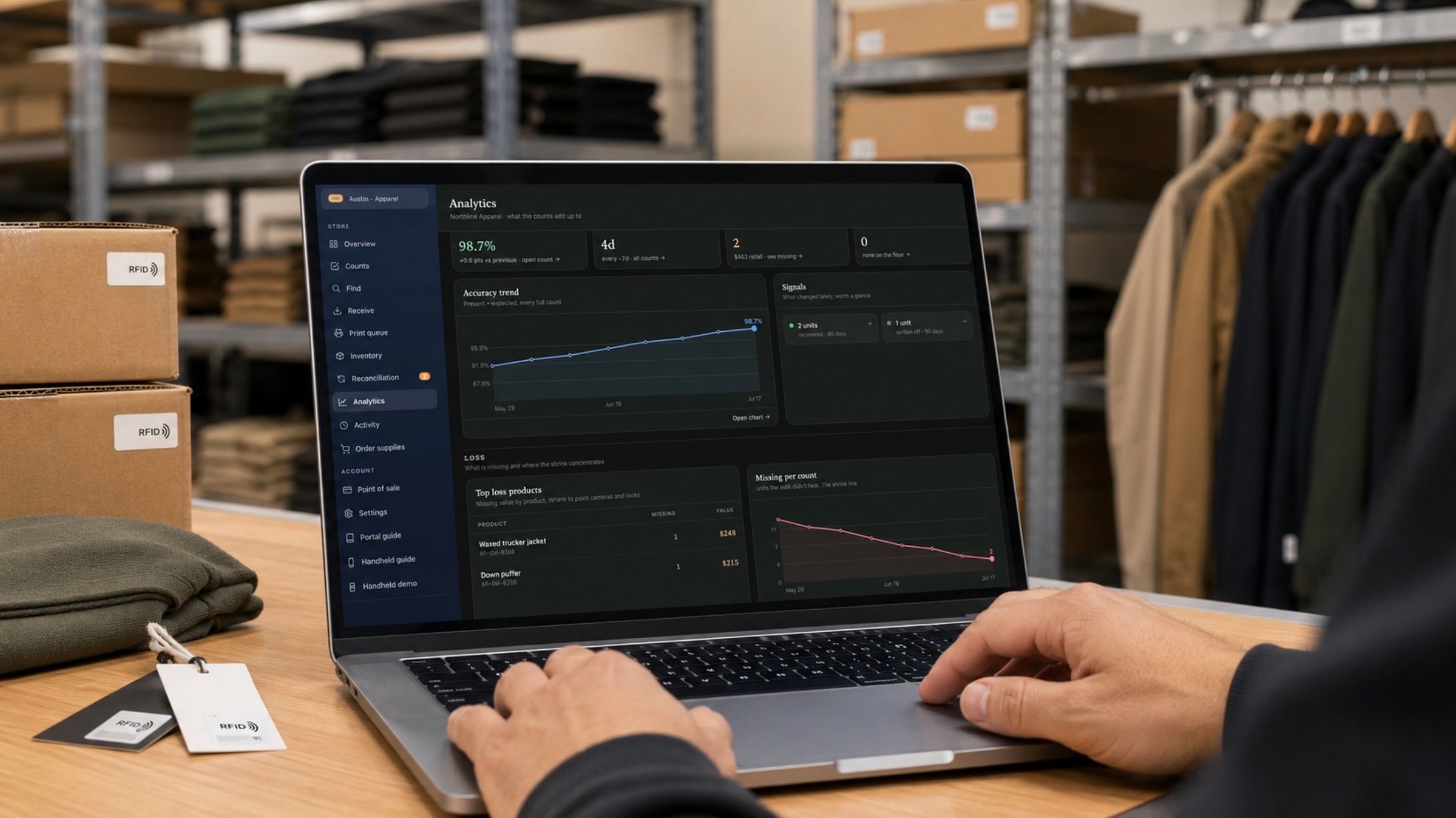
That speed is what makes frequent counting practical, and frequency is where beauty wins. Instead of one stressful annual inventory, a store cycle counts its highest turning walls weekly and keeps records close to reality all year. Online orders then get placed against stock that is really there, which is what makes ship from store and buy online pickup in store work without canceled orders. And because indexRFID flags products that fall below their par level after a count, the fast movers that empty first surface for reorder before the shelf goes bare.
What it looks like in a beauty store
The workflow is the standard RFID inventory program, sized for small dense goods. At receiving, encode a C8101 label for each unit straight from the C8001 handheld in the indexRFID app, or drive the C8005 printer from your receiving data for volume runs, then apply the label to the carton. Sweep the shelves and the backroom with the C8001, and indexRFID collects the reads, resolves them to real products by brand, line, shade, and size, removes duplicate reads, and reports what is present, what appears short, and where the floor differs from your records.
No integration is required to start. You can run indexRFID standalone alongside your existing POS and compare against a catalog imported from a CSV file. If you use Shopify, the optional connection syncs the catalog and on hand counts, reconciles product by product, and pushes corrections you approve back to the store. You do not tag everything on day one either. Most beauty retailers start with one wall or one stockroom, confirm placement and read rates on their actual packaging, then expand.
If you want to see how a count would run across your assortment, the single location Starter Kit includes the reader, the printer, the label formats, and a year of indexRFID, and you can talk to us about a pilot on your hardest to tag products first. Retail Security Group has supplied and supported RFID inside U.S. retail since 2004, and beauty is exactly the kind of dense, fast moving inventory where an accurate count pays for itself.
Sources
- The Korea Herald: Olive Young opens first US store in Pasadena next week
- PR Newswire: Olive Young Debuts in the U.S. With First Store in Pasadena
- Global Cosmetic Industry: Olive Young Plants Its Flag in the US as K-Beauty’s Retail Expansion Accelerates
- eMarketer: Sephora Taps Olive Young to Scale K-Beauty as Demand Surges
- Auburn University RFID Lab: Research and inventory accuracy findings