Case Studies
What Lululemon's RFID Rollout Teaches Retailers About Inventory Accuracy
Lululemon used source tagging and weekly cycle counts to reach roughly 98 percent inventory accuracy. Here is the playbook, the verified numbers, and what any retailer can copy.
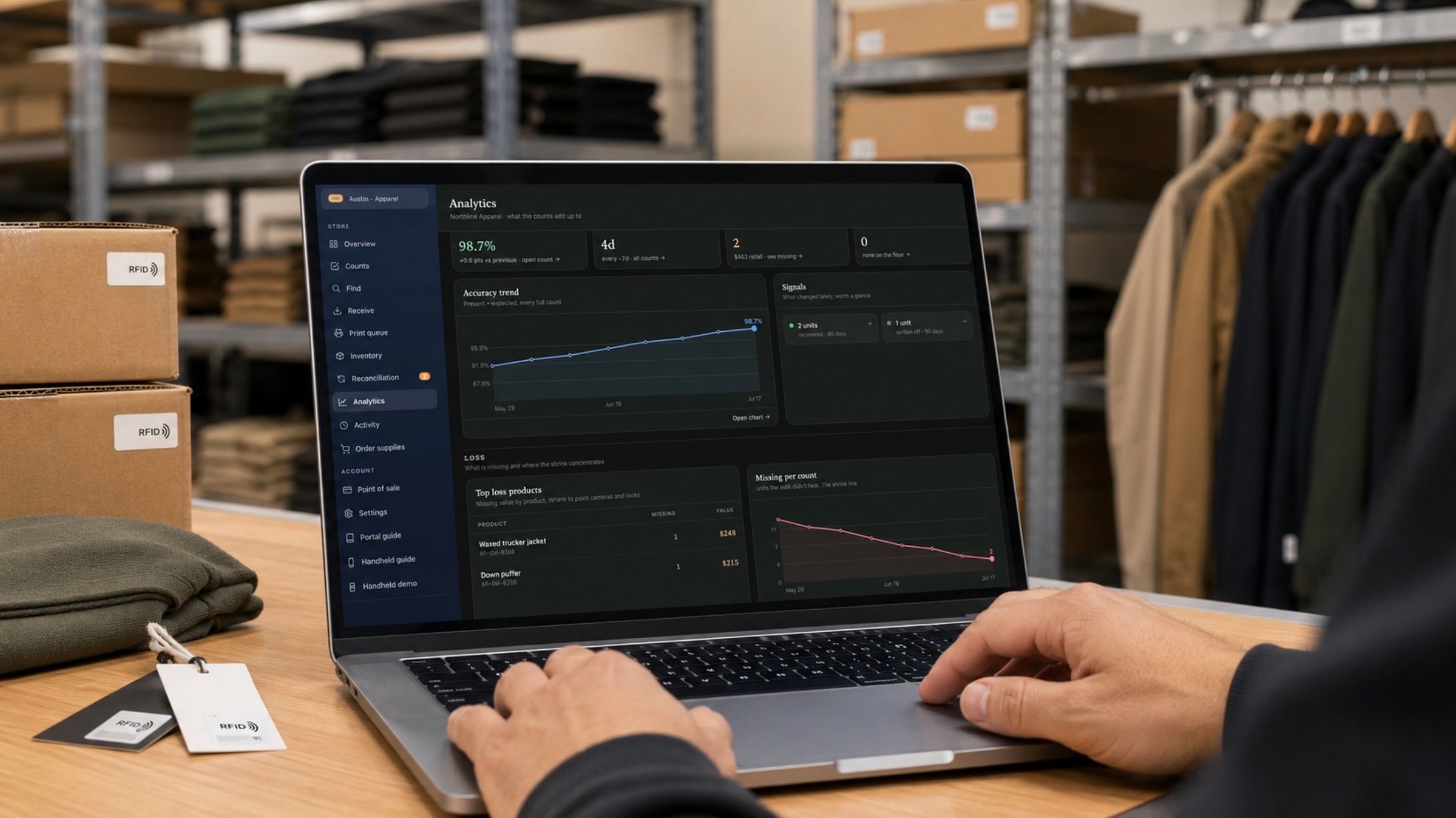
RFID is one of those technologies retail executives have been talking about for twenty years and only recently started getting right. The pitch has always been the same: tag every item, see every item, sell every item. What changed is that the math finally works. Tag costs are down, readers are reliable, and the software has matured to the point where a manager can pull store level inventory on a phone instead of waiting on a quarterly physical count.
If you want a clean example of what good looks like, look at how Lululemon ran its rollout a decade ago. The numbers are still cited because they hold up.
The numbers that still get quoted
Once the system went live, Lululemon reported inventory accuracy of roughly 98 percent across its North American and Hong Kong stores. The rollout was fast: it began in April 2015 and reached every store in about six months.
To understand why 98 percent is impressive, you have to know where most stores start. A landmark study of nearly 370,000 inventory records across 37 stores of a single retailer found 65 percent of those records inaccurate (DeHoratius and Raman, Management Science, 2008). The Auburn University RFID Lab puts typical retail inventory accuracy, in the absence of item level RFID, at roughly 65 to 75 percent. That gap is what creates phantom inventory, missed sales, and stock written off at year end that may reflect bad data rather than confirmed theft.
How they actually did it
The operational details are the useful part.
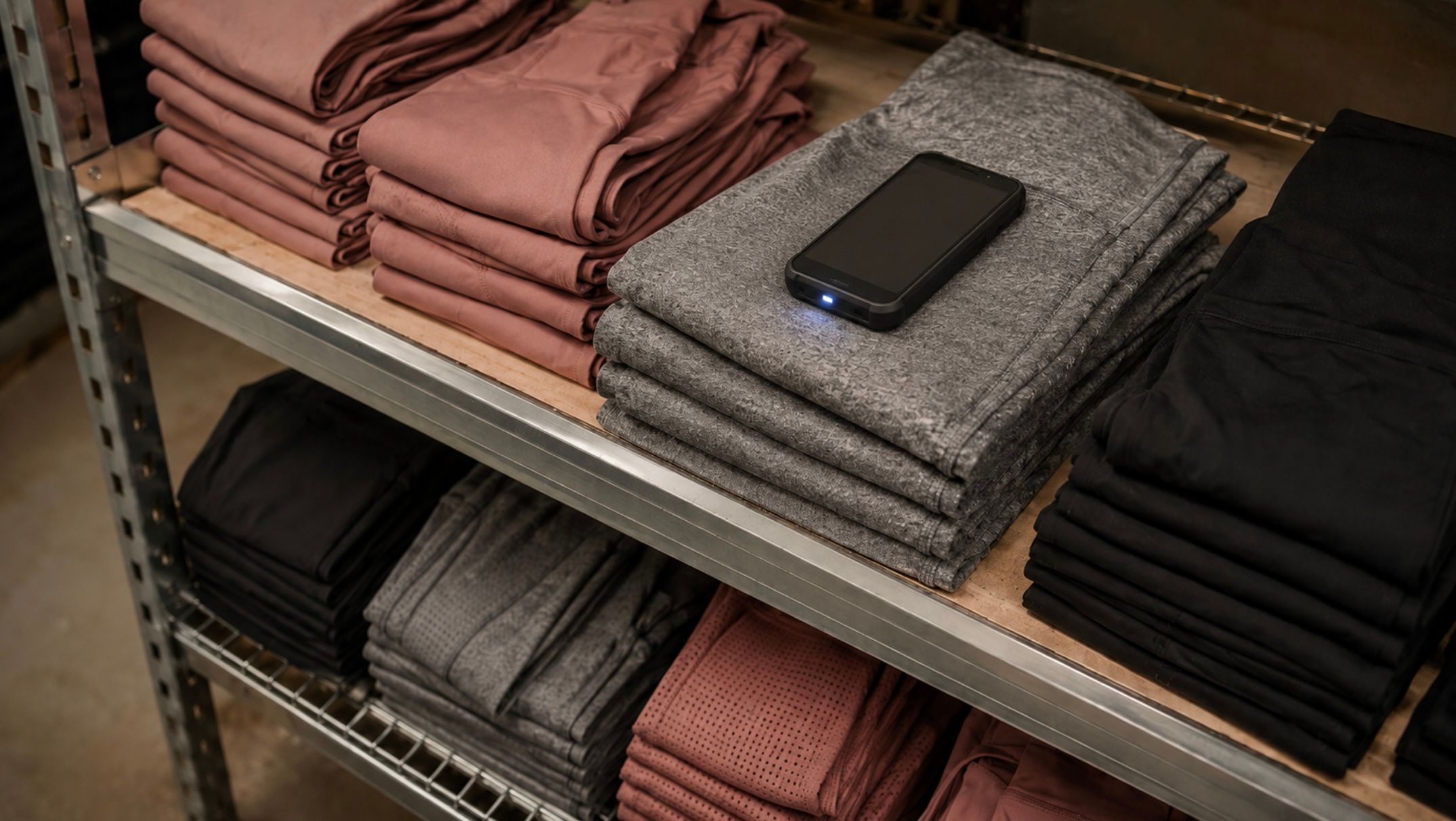
Lululemon used source tagging. RFID enabled hangtags were applied during manufacturing across more than 30 factories in 15 countries, so by the time a carton reached a store the inventory was already digitized. Store associates then ran weekly cycle counts with handheld readers, on the sales floor and in the stockroom, with each area taking around 30 minutes.
That visibility is what unlocked omnichannel selling. On the company’s third quarter investor call in December 2015, leadership said the ability to use RFID inventory data to make merchandise available online or in store accounted for 8 percent of online sales for the quarter. That is real money tied directly to knowing what was in the building.
In later industry reporting, Lululemon’s RFID program director said omnichannel stores running on reliable RFID saw order cancellation rates below 1 percent in strong weeks and up to 4 percent in weaker ones, against 20 to 30 percent for retailers attempting omnichannel without that visibility. The same reporting put the payback at a single season. Treat those last figures as reported remarks rather than audited disclosures, but the direction is clear.
Why the case study still matters
Lululemon was unusually well suited to RFID. The merchandise was item level apparel with hangtags, unit values were high, the omnichannel upside was large, and the company could coordinate source tagging across dozens of factories. Not every store has those conditions.
The operating principles, though, travel well. Any retailer with item level merchandise, real inventory value, omnichannel demands, and a disciplined counting habit can run the same basic play: tag the merchandise at the source, count it often, and connect the data to replenishment and selling decisions. What Lululemon proved is that RFID is not a science project. It is an operating discipline. Stores that adopt it stop guessing. Stores that do not keep losing sales to phantom inventory and keep treating the resulting writedowns as a cost of doing business.
Apparel was the easiest category to crack because hangtags and sewn in care labels give you natural places to put a tag. The same approach now extends to footwear, accessories, cosmetics, and more. If a category has a SKU and a margin worth protecting, there is an RFID approach for it. For a deeper look at the apparel workflow specifically, see our guide on RFID for apparel retail, from stockroom to sales floor.
What RFID actually delivers
RFID is, first, an item level visibility technology. It tells you what is on hand, what has been received, and, depending on the readers you install, whether product is moving through particular zones. Handheld cycle counts confirm availability and help locate merchandise. Continuous, near live tracking of individual items is a bigger build that usually needs fixed readers, such as overhead or doorway sensors, plus the software behind them. Most stores start with handhelds and grow into fixed infrastructure later.
The three things that separate results from regret
Retailers who get Lululemon style results and retailers who buy RFID equipment and never see a payoff usually differ on three points.
- Source tagging. Tags applied at the factory cost less and produce cleaner data than tags applied in the store.
- A real cycle count cadence. RFID without weekly counts is expensive inventory furniture.
- Integration with point of sale and online. The inventory data has to drive selling decisions, not just fill a report nobody reads.
Get those three right and the technology delivers. Skip any one of them and the project stalls.
Where Retail Security Group fits
You do not need Lululemon’s factory network to run this play. RSG supplies the same building blocks at a scale a single store can deploy: the C8001 handheld reader for cycle counts, C8102 RFID hangtags and the other label families for your merchandise, the C8005 printer to encode tags in store when source tagging is not available, and indexRFID software to turn the reads into decisions.
You can run it yourself or have RSG technicians set it up on site. Either way it is the same team that has worked inside U.S. retail since 2004.
If you want to see how a first count would go in your store, talk to Retail Security Group.
Sources
- RFID Journal: RFID Brings Lululemon’s Inventory Accuracy to 98 Percent
- DeHoratius and Raman, “Inventory Record Inaccuracy: An Empirical Analysis,” Management Science (2008)
- Auburn University RFID Lab: Inventory Accuracy
- RIS News: How Lululemon and adidas Use RFID to Set the Stage for Omnichannel (archived)
- NXP: Lululemon RFID Success Story