Industry Guides
RFID for Apparel Retail: From Stockroom to Sales Floor
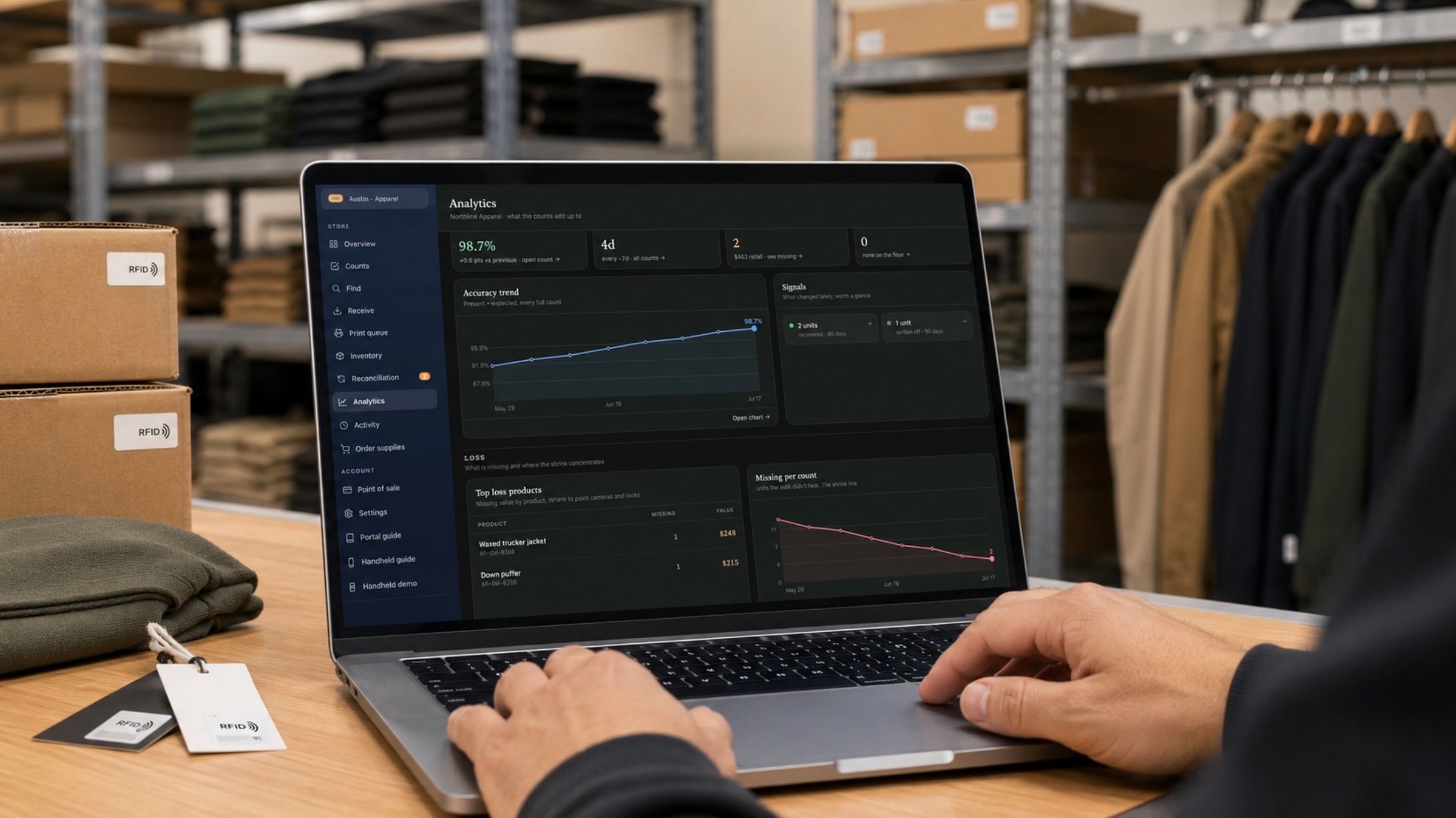
Apparel was the first retail category to adopt RFID at scale. A look at the specific problems it solves for clothing and footwear stores, and how a rollout actually unfolds.
If you walk into a large apparel chain today, there is a good chance every garment on the floor carries an RFID tag, even if you never notice it. Apparel led retail into RFID, and the reasons are specific to how clothing is bought, displayed, and sold.
Why apparel adopted RFID first
Clothing is a high variation, high movement category. A single style might exist in eight sizes and six colors, which is forty eight items that all look nearly identical on a shelf. Multiply that across a season’s range and you get thousands of variants, all moving constantly as customers try things on, set them down, and staff refold and rehang.
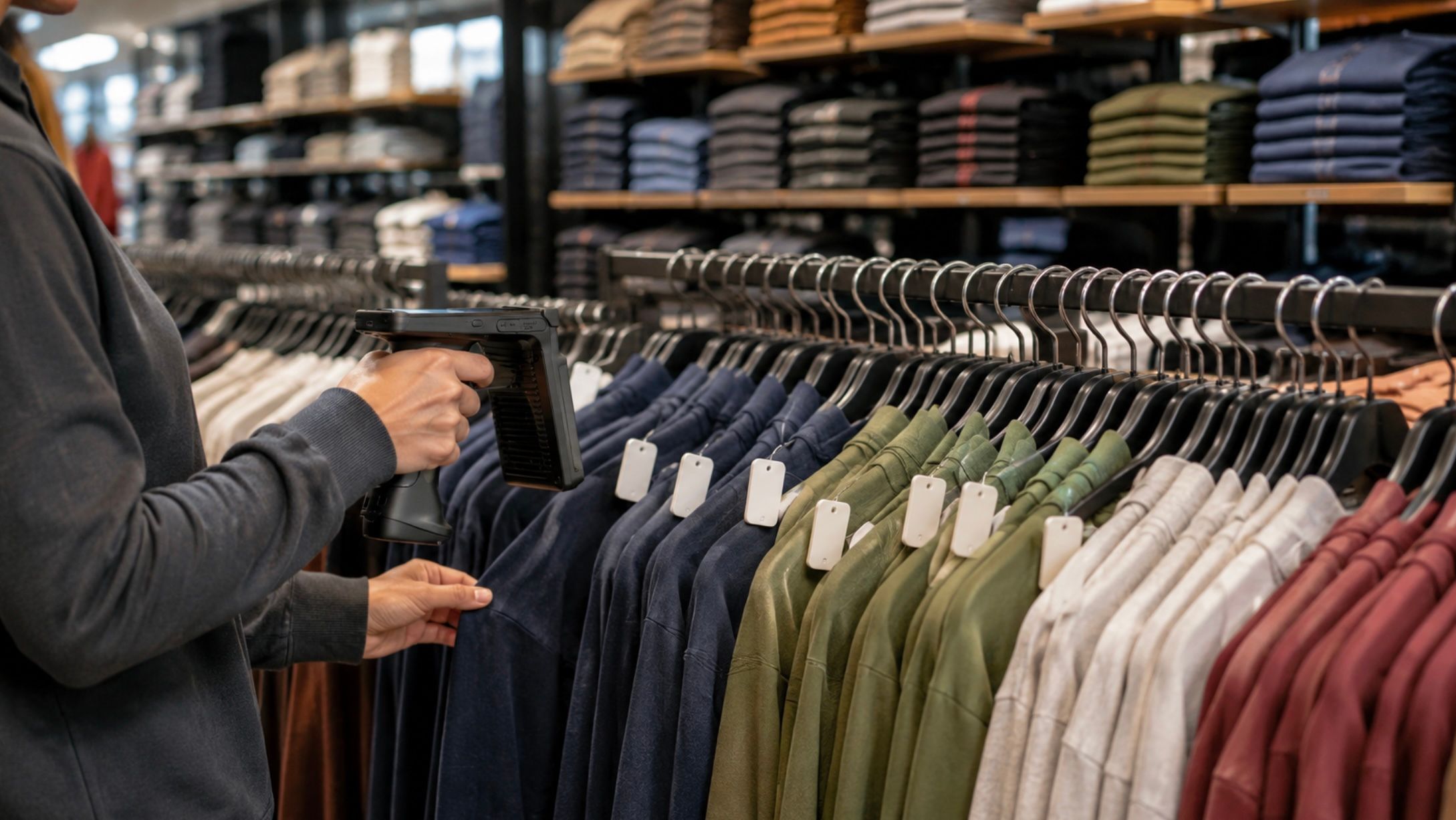
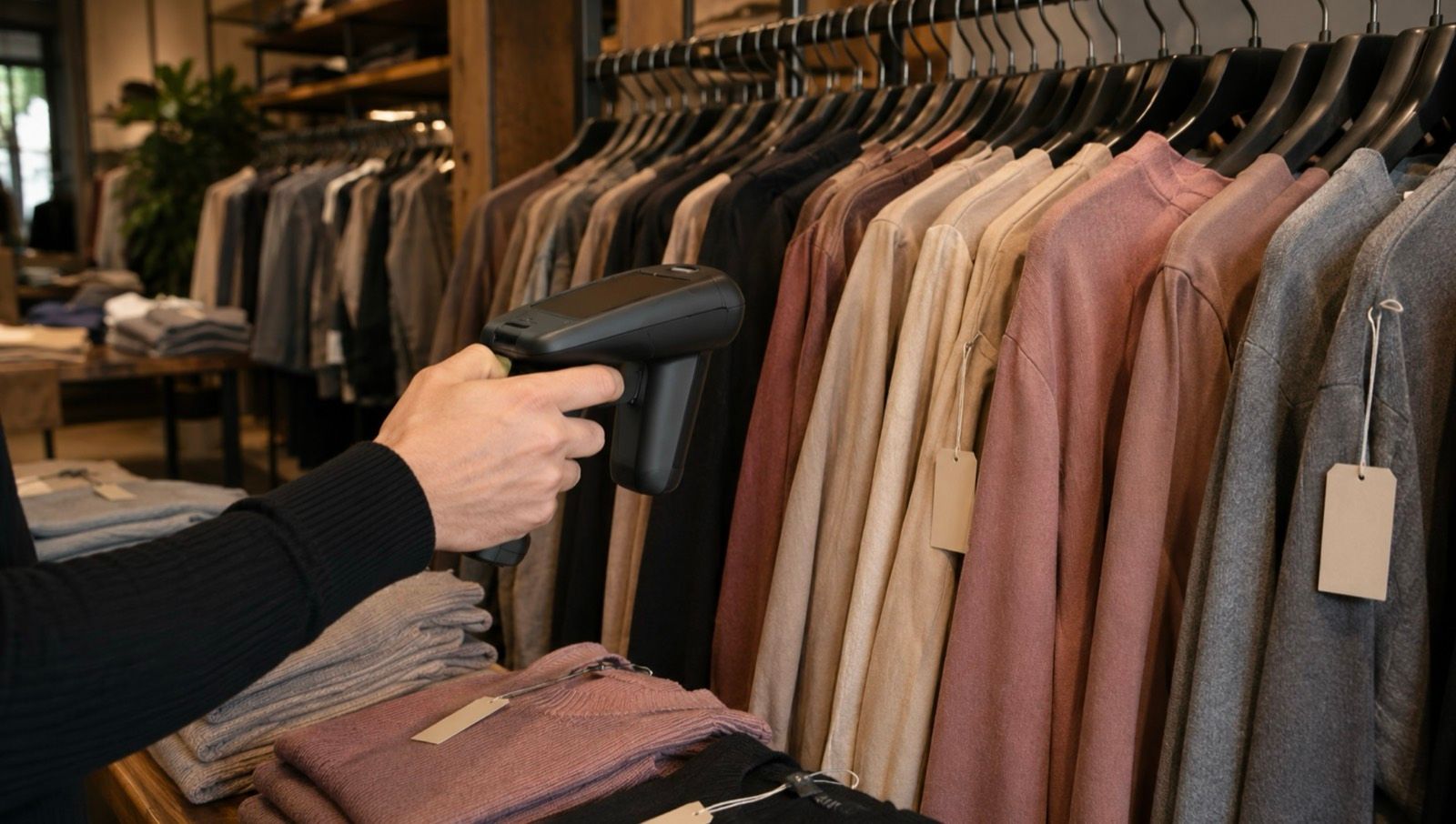
That combination breaks manual counting. By the time a barcode count of the floor is finished, the floor has already changed. Apparel needed a count fast enough to keep up, and RFID delivered it. A staff member can sweep a fixture in seconds and know exactly which size and color is present.
It also helps that garments are friendly to UHF radio signals. Fabric and paper do not block the signal the way metal and liquid do, so apparel tends to read cleanly and consistently.
The problems it solves
For a clothing or footwear store, RFID tends to fix the same handful of pain points.
- The size that is secretly sold out. A style looks in stock because most sizes are on the rack, but the one a customer wants has been gone for a week and nobody logged it. Frequent RFID counts surface that gap fast.
- The stockroom black hole. Backstock is where inventory accuracy goes to die. A reader sweep of the stockroom turns an unknown pile into a known list in minutes.
- Slow restocking of the floor. When you know precisely what is on the floor versus in back, replenishment becomes a short targeted task instead of a guessing game.
- Online orders against phantom stock. If you sell online from store inventory, an accurate count is the difference between a smooth fulfillment and a cancelled order.
What a rollout looks like
Apparel RFID does not have to start big. A typical path looks like this.
- Tag at the source or in store. Many vendors can apply tags during manufacturing. If yours do not, the C8005 printer lets you print and encode C8102 hangtags in store as product arrives.
- Start with one count. Sweep the floor and the stockroom once with the C8001 reader to establish a baseline. This first count usually reveals the gap between what the system thought you had and what is really there.
- Move to cycle counts. Once the baseline is set, short regular counts keep the records accurate. Many stores count high movement categories weekly and the full floor on a longer cadence.
- Expand to receiving and fulfillment. With the basics working, the same tags support faster receiving checks and store based online fulfillment.
A fitting room footnote
One feature worth knowing about for the future: because every garment carries a unique identifier, the same tags that drive your inventory count can eventually power fitting room awareness, surfacing what a customer carried in and what they left with. It is not where most stores start, but it is a capability the tagging makes possible later, without retagging anything.
Built for the independent, not just the chain
The national chains proved RFID works in apparel. For a documented example, see how Lululemon reached roughly 98 percent inventory accuracy with source tagging and weekly cycle counts. The reason it is worth a second look now is that the same hardware and software are within reach of single store and regional retailers, without enterprise tier overhead. The C8001 reader, the C8102 hangtag, and indexRFID software are the same tools whether you run one store or a fleet.
If you run a clothing or footwear store and want to see how a first count would go, talk to Retail Security Group. We have been supporting U.S. retailers since 2004, and our own technicians handle the install if you want it on site.