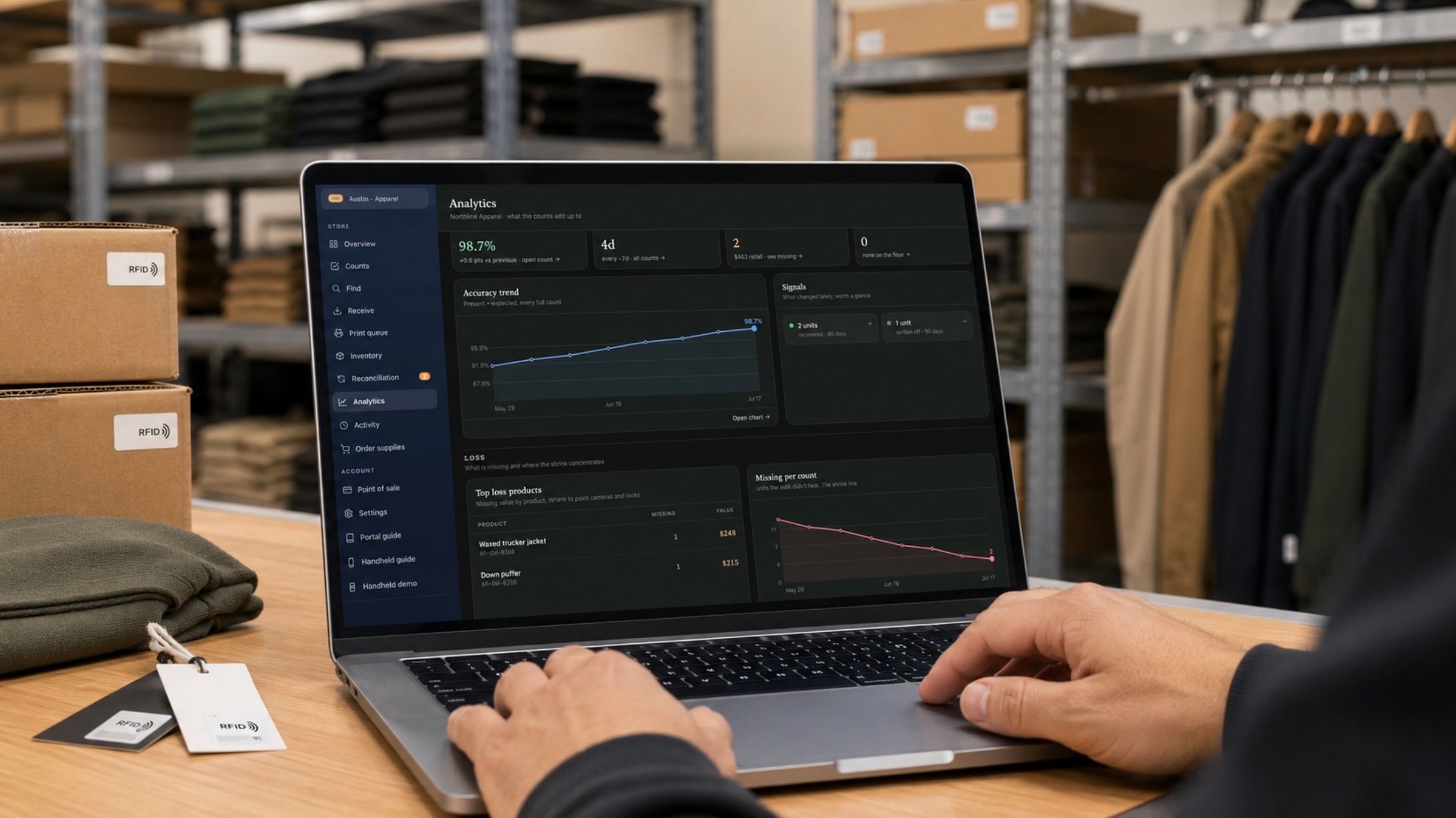
Industry Guides
RFID for Ship from Store: Fulfilling Online Orders from Store Stock
Ship from store and buy online pickup in store turn your shop into a fulfillment center, but only if the count is right. Here is how RFID keeps store inventory accurate enough to fulfill online orders without canceling them.
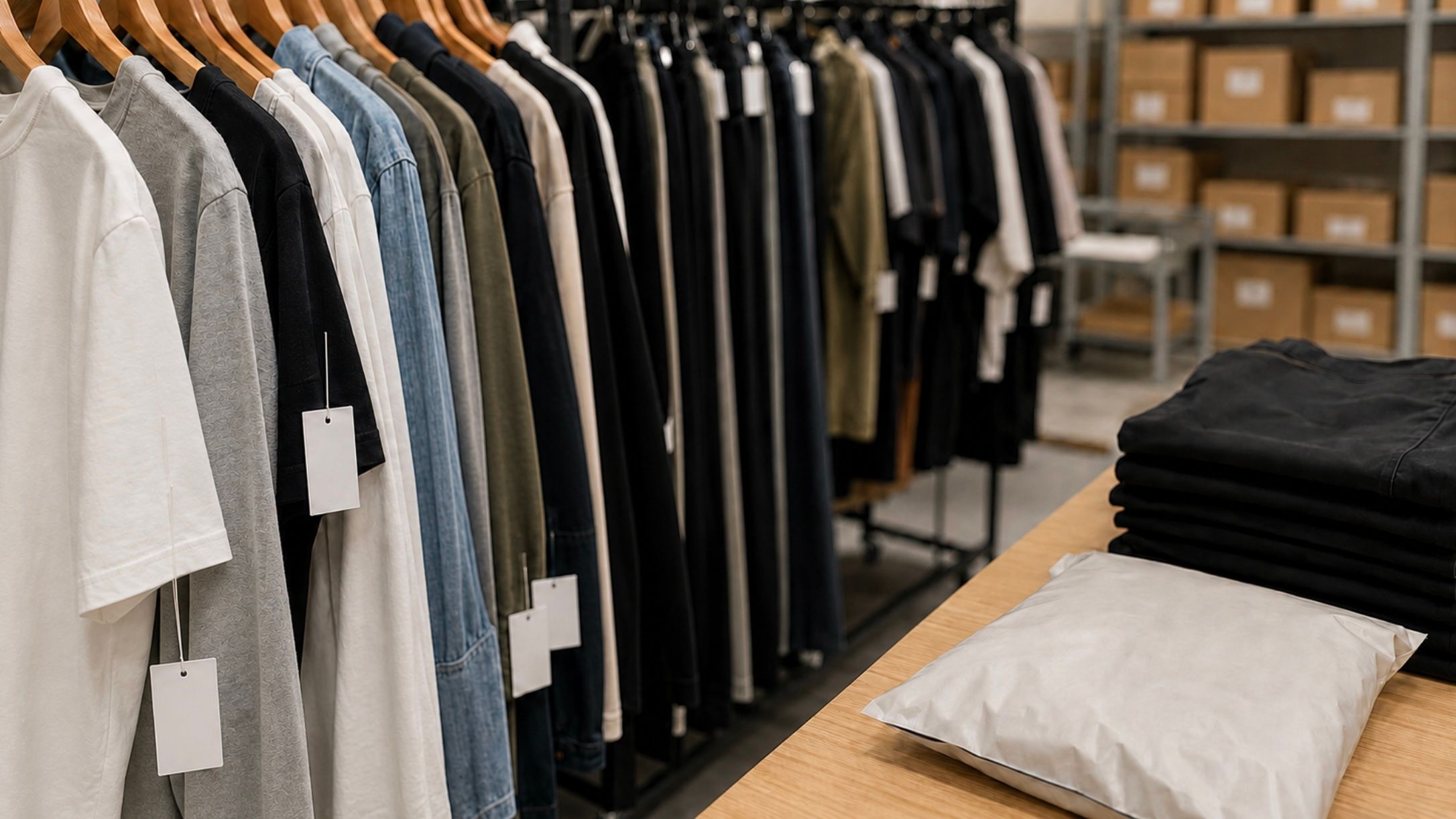
In early July 2026, the apparel brand Jimmy Key described running RFID from its smart fitting rooms all the way back to its warehouse, and counting a store of 3,500 products in about 25 minutes. The counting speed is the headline, but the more interesting part is the reach. When a store can trust its own count that precisely, that store stops being just a place to shop. It becomes a place to fulfill from.
That shift is the reason a lot of retailers are looking at RFID right now. Ship from store and buy online pickup in store both ask the same thing of a location: fulfill an online order out of the stock sitting on your floor and in your back room. Neither one works unless the count behind it is right.
The store quietly became a warehouse
For years the online order and the store were separate worlds. The website shipped from a distribution center, and the store sold to whoever walked in. That line has blurred. Retailers now route online orders to whichever location can fill them fastest, which means a single pair of jeans on your sales floor might be sold to the customer standing in front of it or picked, packed, and shipped to someone three states away.
This is good for the business. Stores are closer to customers than a central warehouse, so shipping is faster and cheaper, and stock that would have sat unsold in one location can serve demand from anywhere. But it moves the burden onto the store’s inventory record. The website is now promising customers that a specific item exists at a specific store, in a specific size and color, right now. If that promise is wrong, the order fails.
What breaks when the count is off
Store inventory records drift. Items get misplaced, received incorrectly, or counted wrong months ago, and the error compounds quietly. In the absence of item level RFID, the Auburn University RFID Lab puts typical retail inventory accuracy at roughly 65 to 75 percent. A store can run fine on numbers like that when it only sells to walk in customers, because a shopper who cannot find an item simply buys something else. Fulfillment is less forgiving. It acts on the record directly.
When the record says an item is in the store and it is not, one of two things happens, and both cost you.
- The order gets canceled. An associate goes to pick the item, cannot find it, and the sale is refunded. The customer waited for nothing, and you have spent labor to disappoint them. Retailers attempting omnichannel fulfillment without reliable inventory data see cancellation rates that industry reporting puts as high as 20 to 30 percent. Our Lululemon case study walks through the numbers on both sides of that gap.
- You hold stock back to be safe. The other reaction is to protect against cancellations by refusing to fulfill from store stock until the on hand count clears a buffer. That works, but it means real, sellable inventory sits invisible to the website. You lose the sale to protect the promise.
Neither is a technology problem. Both are a counting problem. The store cannot promise what it cannot see.
How RFID makes store stock fulfillable
RFID closes the gap by making an accurate count cheap enough to repeat. A barcode count is slow and manual, so most stores do a full one once or twice a year and let the record drift in between. RFID counts are fast, so a store can run them weekly or more often, and the record stays close to reality all year.
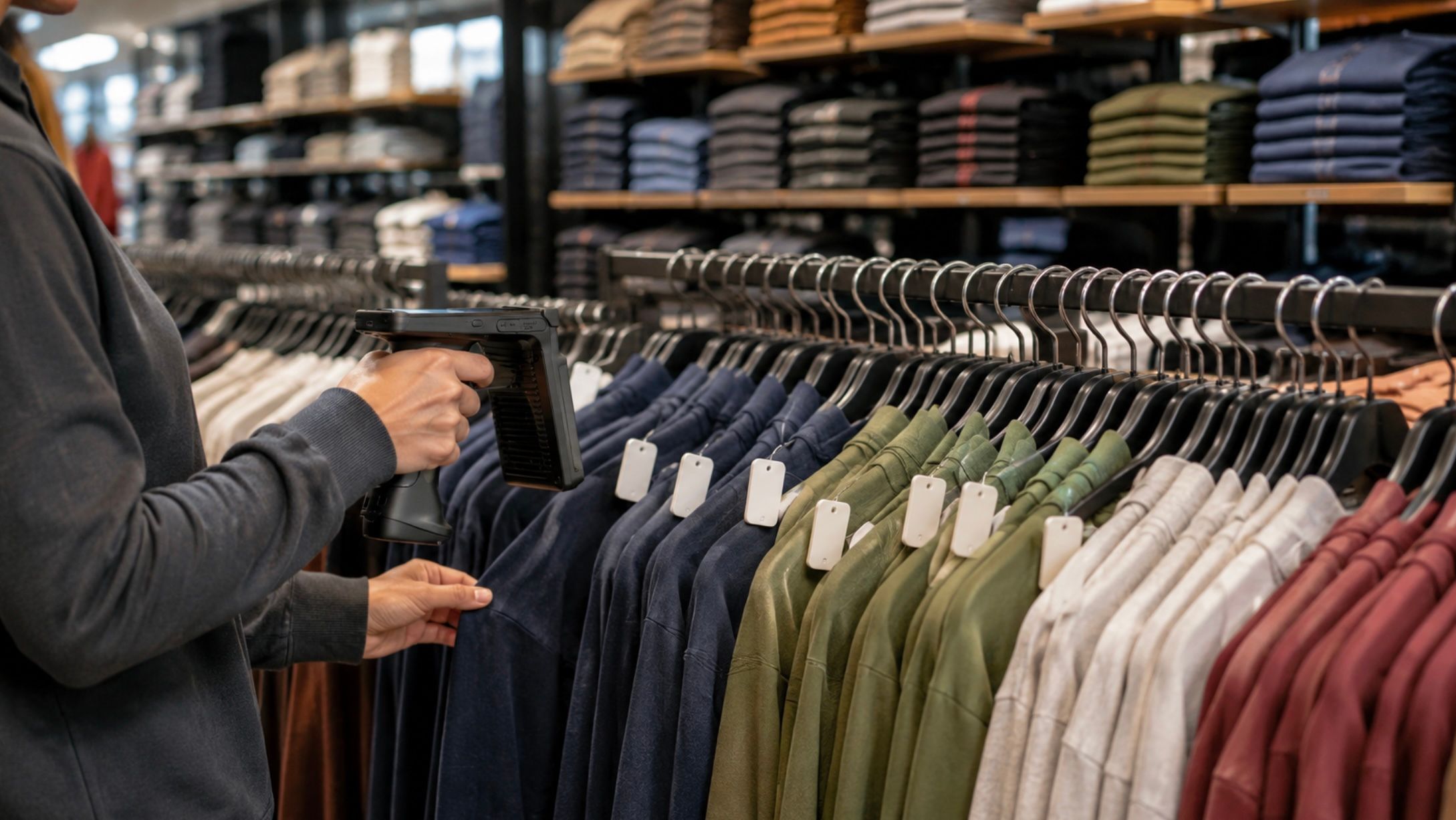
The mechanics are simple. Each item carries a passive UHF RFID tag, usually a printed C8102 hangtag for apparel. A staff member walks the floor and the stockroom with a C8001 handheld reader, which sends out a radio signal and captures every tagged item in range in one sweep, no line of sight and no scanning items one at a time. indexRFID, the software behind the reads, resolves them into a real count by style, size, and color, and shows what is present, what appears short, and where the floor differs from the record.
That frequent, trustworthy count is what a fulfillment engine needs underneath it. When the website checks whether a store can fill an order, it is checking a number that was true days ago, not one that was true last January.
Picking the order without a scavenger hunt
Accuracy gets the order accepted. Speed gets it out the door. The slow, expensive part of store fulfillment is the pick: an associate hunting through a crowded floor and a full stockroom for one specific unit while customers wait for help.
RFID helps here too. Because the handheld reader responds to the tag it is looking for, an associate can use it to home in on a specific item rather than reading a shelf label at a time. The signal gets stronger as the reader nears the tag, so a unit that would take minutes to find by eye is located in a fraction of that. When your fulfillment volume climbs during a peak season, that difference between a two minute pick and a ten minute one is the difference between hitting your same day cutoff and missing it.
Where to start
You do not turn on store fulfillment across a whole chain on day one, and you do not tag the whole store on day one either. Most retailers start by tagging one category, confirming that weekly cycle counts hold the record steady, and only then letting the website fulfill from that store’s stock. Once the count is proven reliable, you widen the categories and add locations. The hardware does not change from the first store to the fiftieth, so the pilot and the rollout use the same reader, the same labels, and the same software.
The point of ship from store is to sell the inventory you already own, from wherever it happens to sit, without disappointing the customer who ordered it. RFID is what makes the underlying count good enough to make that promise and keep it.
If you want to see how accurate a first count would be in your store, the RFID starter kit is sized for a single location and includes the reader, the printer, labels, and a year of indexRFID. Or talk to us about the categories you would fulfill from first. Either way it is the same team that has supplied and supported U.S. retail since 2004.